7 Mistakes in DOT Post Accident Drug Testing Requirements | READI Collect
April 6, 2026 · RC Team
In the highly regulated landscape of the United States transportation and logistics sector, the operational integrity of a fleet is fundamentally tethered to its adherence to federal safety mandates. Specifically, the Department of Transportation (DOT) and the Federal Motor Carrier Safety Administration (FMCSA) have established rigorous protocols under 49 CFR § 382.303 regarding post-accident drug and alcohol testing. For safety managers, fleet directors, and HR departments within trucking, aviation, railroad, and maritime industries, the period immediately following an incident is not merely a logistical challenge but a high-stakes legal and regulatory juncture.
Failure to execute these requirements with precision can result in significant civil penalties, increased liability during litigation, and a compromise of the organization’s safety ratings. To mitigate these risks and safeguard your operational continuity, it is imperative to identify and rectify the common procedural errors that plague post-accident testing protocols. Below, we explore the seven most prevalent mistakes made by organizations and provide a strategic framework for resolution.
1. Misinterpreting the Statutory Criteria for Testing
A fundamental error frequently observed in fleet management is the misinterpretation of when a DOT post-accident test is legally required. Testing is not a universal requirement for every minor "fender-bender"; rather, it is triggered by specific legal thresholds. According to FMCSA regulations, testing is mandatory in the event of a human fatality, regardless of whether the driver was cited. However, in non-fatal incidents, the requirement is dual-pronged: testing must occur if a driver receives a citation for a moving violation AND the accident involves either immediate medical treatment away from the scene for any individual or at least one vehicle requiring a tow from the scene.
The Fix: Develop a robust decision-making matrix for your dispatchers and safety officers. By clearly delineating the criteria: Fatality vs. Citation with Injury/Tow: you ensure that your organization remains compliant without incurring the unnecessary costs and employee disruption of non-mandated testing.
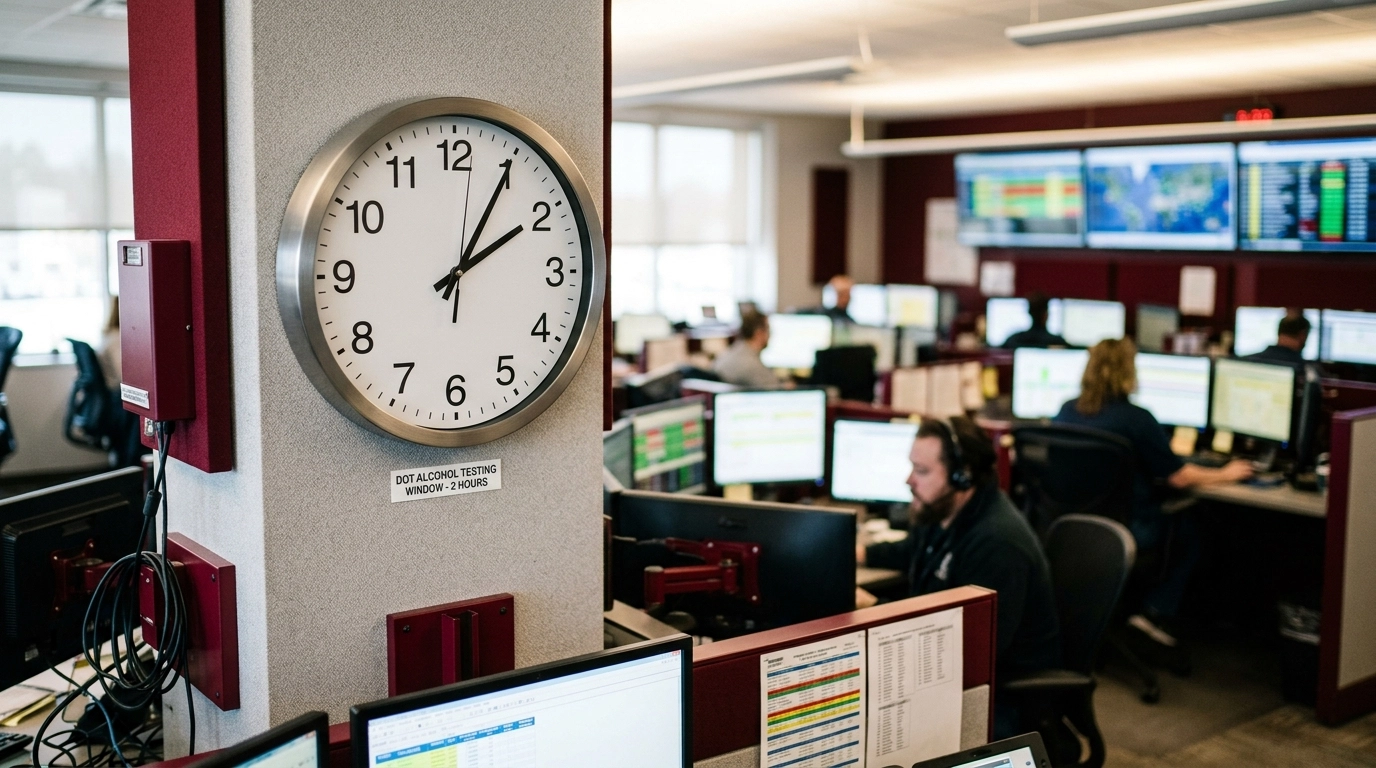
2. Missing the Critical Two-Hour Alcohol Testing Window
Perhaps the most time-sensitive requirement in the DOT framework is the administration of alcohol testing. The FMCSA mandates that an alcohol test be administered within two hours of the qualifying accident. If the test is not performed within this initial window, the employer must continue efforts to test but must also document the specific reasons why the test was not promptly administered. If eight hours pass without a successful test, all attempts must cease, and a comprehensive record of the failure must be maintained.
The Fix: Relying on the traditional "clinic model" often renders this two-hour window impossible to meet due to travel time and wait periods. To ensure compliance, organizations should leverage emergency mobile drug testing solutions. Utilizing on-demand onsite collection allows for immediate deployment of certified professionals to the scene, drastically increasing the probability of meeting the two-hour threshold.
3. Failure to Document Diligent Effort for Testing Delays
Regulatory compliance is as much about documentation as it is about action. When an alcohol test is delayed beyond the two-hour mark, or a drug test is delayed beyond the initial period, the DOT requires a formal record detailing the "diligent efforts" made to comply. Many organizations fail to maintain a standardized "Statement of Diligence," leaving them vulnerable during a DOT audit.
The Fix: Implement a digital reporting system that automatically prompts supervisors to record the specific impediments to testing: such as police investigations, road closures, or medical emergencies: at the two-hour and eight-hour marks. This documentation serves as a critical defense, demonstrating to regulators that the organization acted in good faith under challenging circumstances.
4. Over-Reliance on Traditional Clinic-Based Logistics
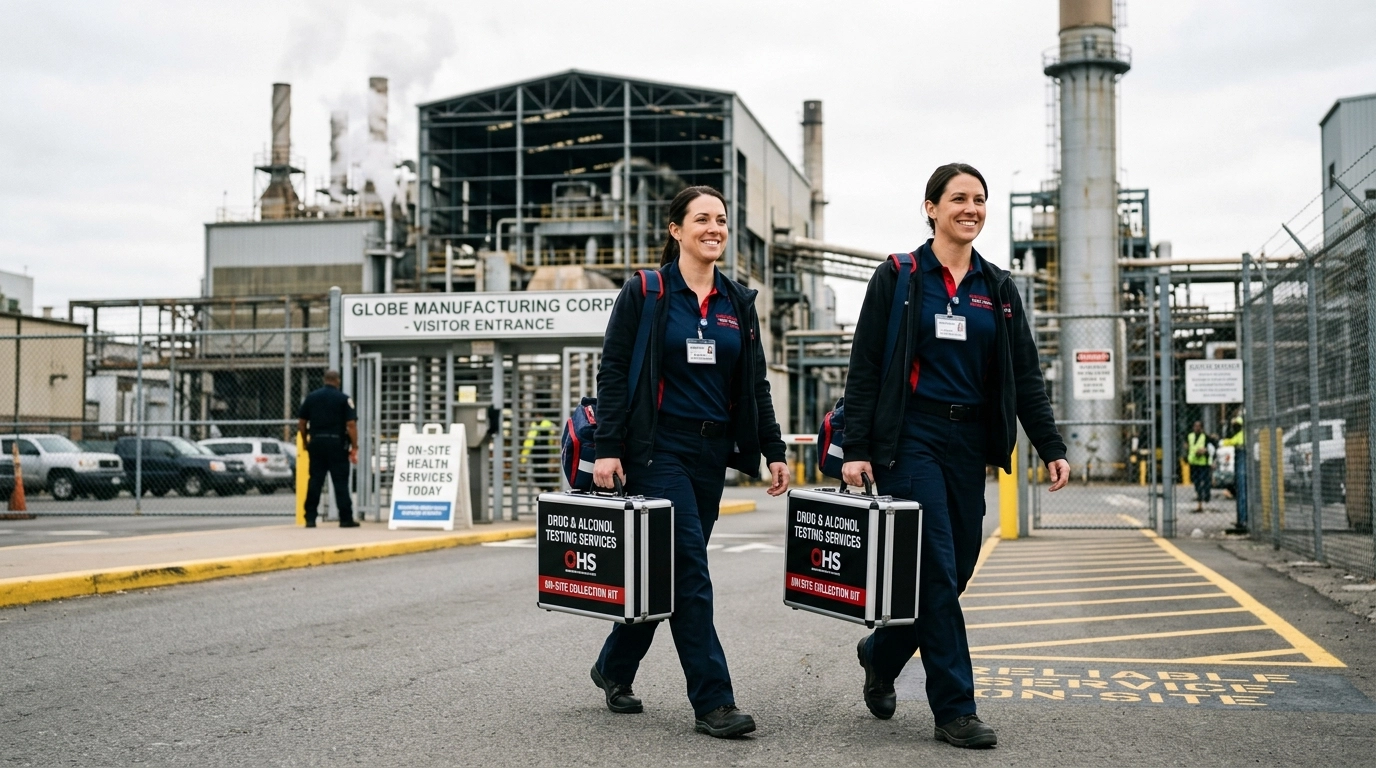
For many years, the default response to a post-accident scenario was to direct the driver to a local occupational health clinic. However, this methodology introduces significant risk factors, including increased downtime, the potential for driver tampering during unescorted travel, and the operational burden of coordinating transportation for a driver whose vehicle may have been towed. Furthermore, clinics operate on fixed schedules, which is incompatible with an industry that functions 24/7/365.
The Fix: Transition to a mobile drug testing service that prioritizes onsite collection. By bringing the laboratory-grade collection process to the site of the incident or the terminal, you minimize downtime and maintain a superior chain of custody. This transition from a "pull" model (bringing the driver to the test) to a "push" model (bringing the test to the driver) is a strategic imperative for modern fleet management.
5. Neglecting the 32-Hour Drug Testing Threshold
While alcohol testing has an eight-hour cutoff, drug testing for controlled substances under DOT rules must be completed within 32 hours of the accident. It is a common misconception that if the alcohol window is missed, the drug test is also void. This is not the case. The 32-hour window is firm, and failing to secure a specimen within this timeframe constitutes a serious regulatory violation.
The Fix: Even if an incident occurs in a remote location or during a holiday, the 32-hour clock remains active. Organizations must have a nationwide network of responders capable of reaching a driver regardless of the geographic location of the accident. Utilizing a nationwide network of certified collectors ensures that the 32-hour requirement is met, even in the most challenging environments.
6. Lacking 24/7/365 On-Demand Response Capabilities
Accidents are inherently unpredictable and frequently occur outside of standard business hours. An organization that lacks a dedicated 24/7 post-accident drug testing protocol is essentially operating without a safety net. If your current provider does not offer a guaranteed after-hours response, you are at risk of non-compliance every night and weekend.
The Fix: Modernize your response protocol by adopting On-Demand Collections via technology-driven platforms. These services provide immediate connection to professional onsite specimen collectors instantly when an incident occurs. This 24/7 availability is crucial for DOT post-accident requirements, ensuring that no matter the hour, your organization is prepared to initiate the required protocols immediately.

7. Compromising on Collector Certification and Chain of Custody
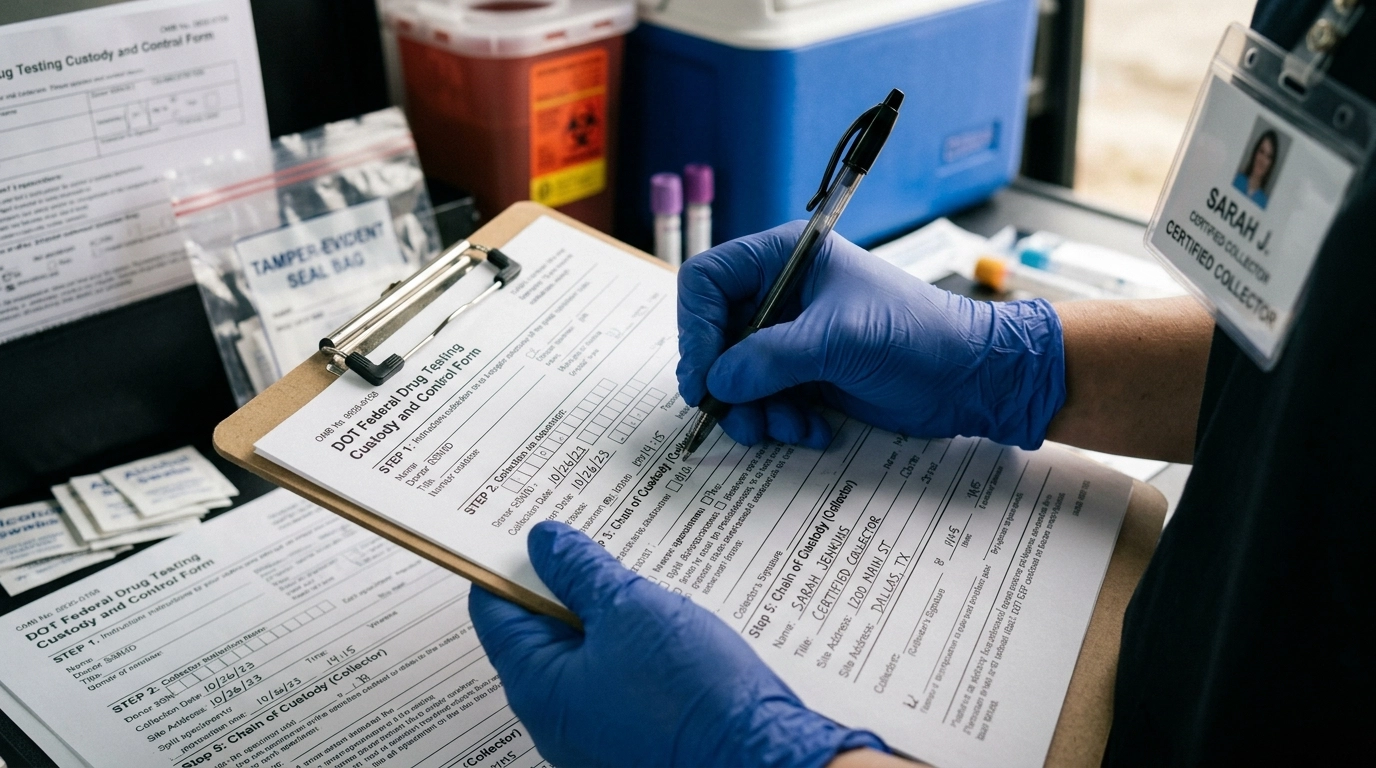
The legal defensibility of a drug test result hinges entirely on the integrity of the collection process. Utilizing uncertified personnel or failing to strictly adhere to the federal Chain of Custody (CoC) procedures as outlined in 49 CFR Part 40 can lead to results being overturned in court or dismissed by the Medical Review Officer (MRO). This is particularly dangerous in post-accident scenarios where litigation is likely.
The Fix: Ensure that every collection is performed by a highly trained and certified mobile testing professional. At READI Collect, our network utilizes patented technology to manage the collection process, ensuring that every step meets or exceeds DOT standards for legal and forensic integrity.
The Strategic Imperative: READI Collect
Ultimately, the goal of post-accident testing is not merely to "check a box" for compliance, but to uphold the safety of our highways, skies, and waterways while protecting the organizational interests of the carrier. We recognize that in the minutes following an accident, safety managers are often overwhelmed with competing priorities: from driver welfare to cargo recovery.
At READI Collect, we have engineered a one-stop shop designed to alleviate the burden of post-accident compliance. Our main offering is fast and reliable onsite drug and alcohol test collections, driven by a 21st-century mobile application that connects you with a nationwide network of professional responders instantly.
Whether you require scheduled onsite testing for routine random draws or immediate incident pricing for an urgent post-accident need, our patented technology ensures the fastest response times in the industry. By partnering with READI Collect, you are not just hiring a service; you are integrating a technology-driven safety partner committed to speed, reliability, and the preservation of your operational integrity.
> Take Action Today: Evaluate your current post-accident response time. If you cannot guarantee a certified collector onsite within the two-hour window, your organization is at risk. Register with READI Collect to gain immediate access to our nationwide responder network and secure the future of your fleet’s compliance.