DOT Alcohol Testing Time Limits Matter: Why Every Minute Counts After an Incident
April 20, 2026 · RC Team
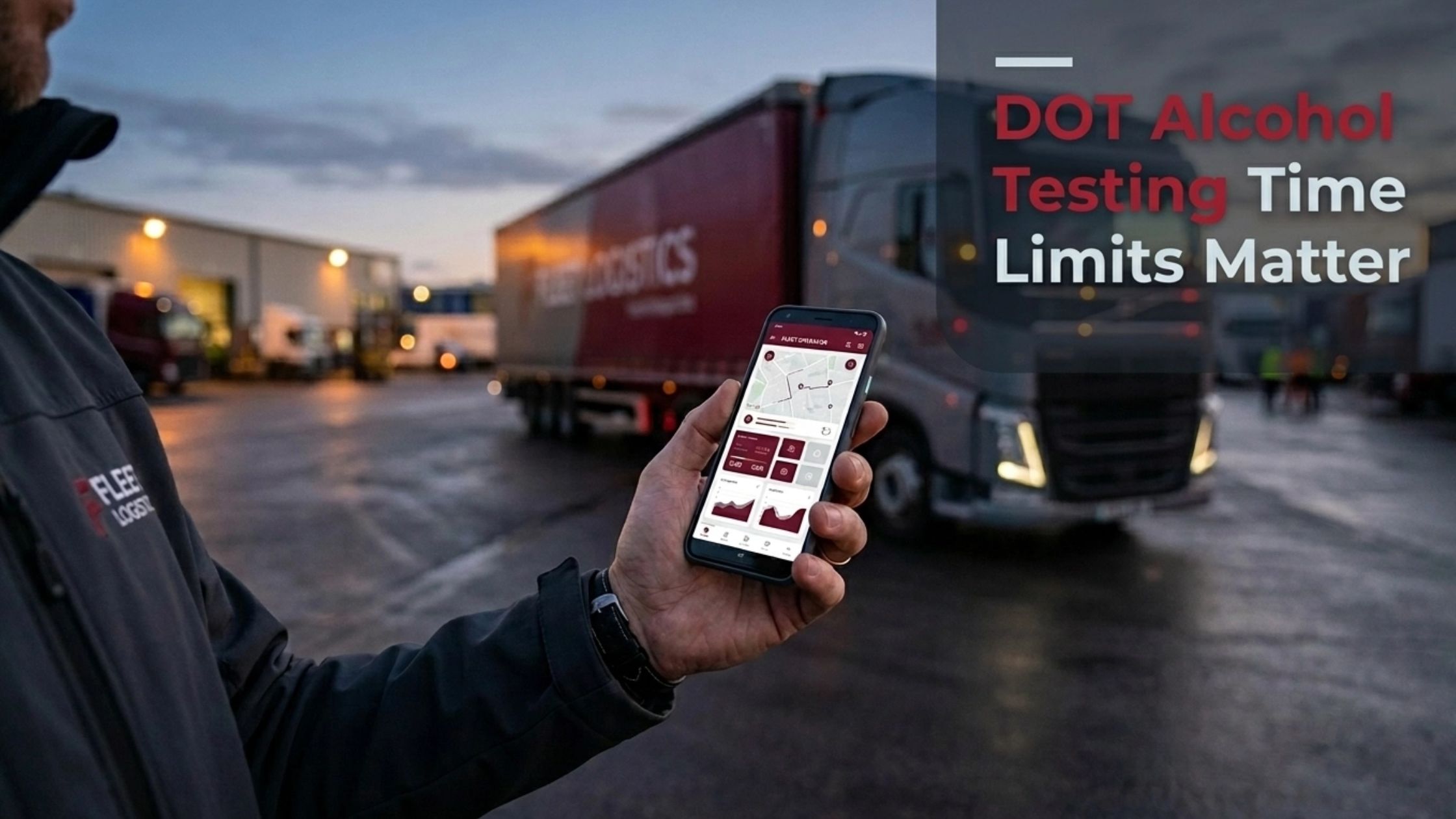
In the highly regulated ecosystem of the United States transportation industry, the operational integrity of a fleet is predicated upon strict adherence to safety protocols. Among the most critical of these is the execution of post-accident drug and alcohol testing. For safety managers and fleet coordinators, an accident is not merely a logistical disruption; it is a high-stakes compliance event. The Federal Motor Carrier Safety Administration (FMCSA) mandates precise timelines that, if ignored, can lead to severe civil penalties, increased liability exposure, and a compromise of the organization’s standing with regulatory bodies.
Central to this compliance framework is the reality of human physiology: alcohol metabolizes rapidly. Unlike other substances that may remain detectable in the system for days or weeks, alcohol levels dissipate within hours. Consequently, the window for accurate verification of impairment is exceptionally narrow. Understanding the intricacies of 49 CFR § 382.303 is not just a strategic imperative: it is a legal necessity for safeguarding the longevity and reputation of any modern logistics enterprise.
The Regulatory Framework: Deciphering 49 CFR § 382.303
The Department of Transportation (DOT) has established clear criteria for when a post-accident test is required. It is a common misconception that every minor collision necessitates a chemical test. Under FMCSA regulations, testing is mandatory if the accident involved a human fatality, if the driver received a citation for a moving violation and a vehicle required towing from the scene, or if the driver received a citation and any individual required immediate medical treatment away from the site.
When these conditions are met, the employer’s responsibility is triggered immediately. The regulations distinguish between drug testing and alcohol testing timelines, reflecting the different rates at which these substances are processed by the body. While the drug testing window extends to 32 hours, the alcohol testing window is significantly more compressed, divided into two distinct phases: the two-hour preferred window and the eight-hour absolute limit.
> "The employer shall continue to make reasonable efforts to administer the test until eight hours have elapsed... If an alcohol test... is not administered within two hours following the accident, the employer shall prepare and maintain on file a record stating the reasons the test was not promptly administered." : 49 CFR § 382.303(d)(1)
The Crucial Two-Hour Window: Documentation and Diligence
The first 120 minutes following an incident are the most critical for safety coordinators. The FMCSA identifies this as the "preferred window" for alcohol testing. The primary objective of this stringent timeline is to capture the most accurate data regarding the driver’s biological state at the time of the event.
Failure to administer a test within this two-hour period does not immediately result in a violation, but it does initiate a secondary regulatory requirement: documentation. Should the two-hour threshold pass without a completed breath or saliva alcohol test, the employer must document the specific reasons for the delay. This record must be thorough and defensible, citing factors such as remote location, emergency medical priorities, or law enforcement investigations that prevented timely collection.
Strategic risk management requires that these records are not merely anecdotal. They must be part of a formal compliance file, ready for inspection during a DOT audit. Furthermore, the employer is obligated to continue attempting to secure a test. The expiration of the two-hour window is not a signal to cease efforts; rather, it is a signal to intensify documentation while maintaining operational momentum toward testing.

The Eight-Hour Absolute Limit: The Point of No Return
If the initial two-hour window is missed, the clock continues to run toward the eight-hour mark. This represents the final threshold for alcohol testing under post-accident regulations. Once eight hours have elapsed since the time of the incident, all attempts to administer an alcohol test must cease.
At this juncture, the regulatory burden shifts from collection to explanation. The employer must prepare a formal record detailing why the test was not conducted within the eight-hour timeframe. This documentation is scrutinized heavily during audits. If the FMCSA determines that the employer did not exert "reasonable effort": such as failing to utilize available onsite testing services: the company may face substantial fines.
Moreover, there is a legal prohibition regarding the driver’s conduct during this period. According to 49 CFR § 382.209, no driver required to take a post-accident alcohol test shall consume alcohol for eight hours following the accident, or until they undergo the test, whichever occurs first. Ensuring this compliance in the field requires immediate intervention from the safety department.
Operational Risks of Non-Compliance
The consequences of failing to meet these deadlines extend far beyond a simple administrative oversight. In the event of litigation following a major accident, a missed alcohol testing window can be portrayed as a failure of oversight, potentially leading to claims of negligent entrustment or corporate negligence.
Civil Penalties: The FMCSA has the authority to levy significant fines against carriers that show a pattern of non-compliance or fail to provide adequate documentation for missed tests.
Litigation Vulnerability: In a court of law, the absence of a timely negative alcohol test can create an evidentiary void that plaintiff attorneys may exploit to suggest impairment, regardless of the driver's actual state.
Audit Red Flags: Repeated failures to meet the two-hour and eight-hour windows are high-priority indicators for DOT investigators, often leading to more comprehensive and invasive compliance reviews.
Operational Downtime: Relying on traditional clinics, which may have limited hours or long wait times, often leads to missed windows and extended driver downtime, impacting the fleet's overall productivity.

The Challenge of 24/7 Availability
Accidents do not adhere to traditional business hours. Statistics show that a significant percentage of commercial vehicle incidents occur during late-night hours, early mornings, or weekends: times when standard occupational health clinics are often closed. This creates a fundamental conflict between regulatory requirements and logistical reality.
For many fleet managers, the traditional approach of sending a driver to a fixed clinic is fraught with risk. The transit time, coupled with potential clinic wait times, can easily consume the initial two-hour window. Furthermore, in rural or remote areas, finding a clinic that is open at 2:00 AM and capable of performing a DOT-certified alcohol test is a daunting challenge that often leads to compliance failure.
Mitigating Risk with READI Collect
To uphold the highest standards of safety and regulatory adherence, companies are increasingly moving away from the clinic-based model in favor of modern, technology-driven solutions. At READI Collect, we recognize that speed is the most critical variable in the post-accident compliance equation.
Our On-Demand Collections service is specifically engineered to address the "every minute counts" reality of DOT alcohol testing. By utilizing a patented mobile application, safety managers can instantly connect with a nationwide network of professional, certified onsite specimen collectors. This eliminates the need for driver travel and removes the uncertainty of clinic operating hours.

Why Speed and Reliability Matter
We provide a seamless interface that allows for immediate response the moment an incident occurs. Our technology-driven approach ensures that a collector is dispatched to your specific location: whether it is a roadside scene, a distribution center, or a remote transport hub: anywhere in the country.
Nationwide Coverage: Our responders are strategically positioned to provide comprehensive coverage, ensuring that even remote incidents can be addressed within the regulatory windows.
Certified Professionals: Every collector in our network is highly trained and certified in DOT-compliant collection procedures, ensuring that the integrity of the specimen and the chain of custody are maintained perfectly.
24/7/365 Readiness: We operate on the same schedule as the transportation industry: around the clock. There are no "after-hours" delays when you utilize our platform.
Documentation Support: By facilitating rapid testing, we help you avoid the burdensome requirement of documenting missed windows, thereby protecting your company from audit scrutiny.
Strategic Imperative for Fleet Safety
Ultimately, the goal of post-accident testing is to verify the safety of the workforce and the public. By prioritizing the two-hour and eight-hour windows, organizations demonstrate a commitment to safety and a sophisticated understanding of their regulatory obligations.
In the modern era of logistics, relying on outdated collection methods is a risk that few companies can afford. We invite you to explore how our one-stop-shop approach and industry partnerships can strengthen your safety program. Whether you require immediate on-demand assistance or wish to schedule onsite testing for routine compliance, we provide the technology and expertise necessary to keep your fleet moving safely and legally.
For comprehensive guidance on integrating our mobile testing solutions into your safety protocol, contact our team today to learn more about our nationwide network and specialized services.