Real-Time Status Reports and Geo-Fenced Tracking: How Onsite Testing Strengthens Your Safety Score
September 7, 2026 · RC Team
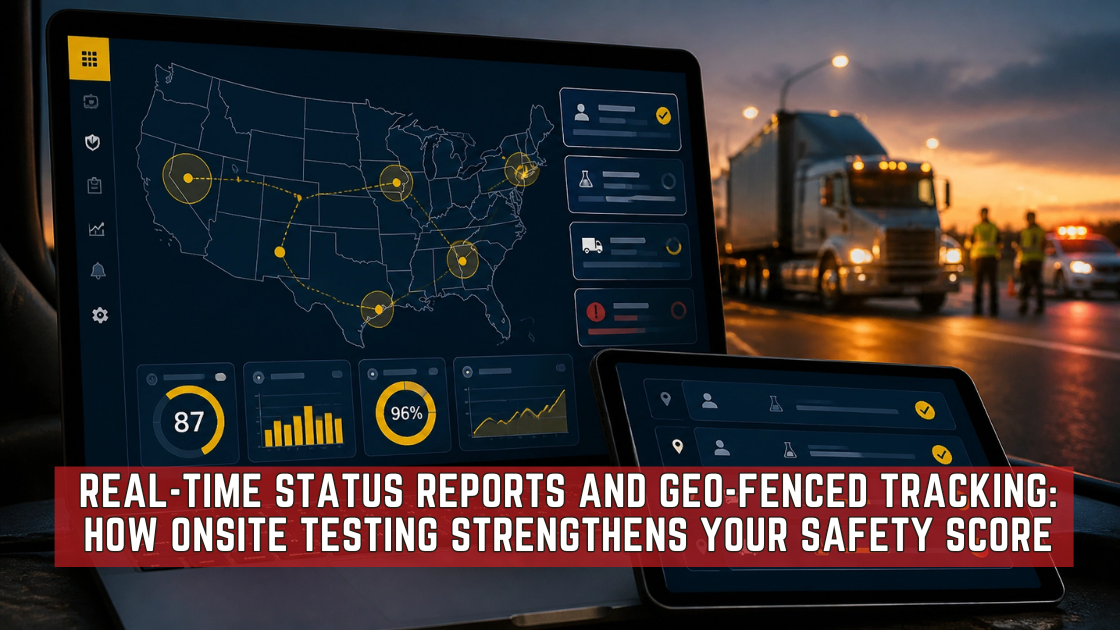
After a serious vehicle accident, your response is measured in more than hours and minutes. You may also need to show who initiated the testing request, when a collector was dispatched, where each step occurred, and whether the required process was completed promptly. READI Collect helps you build that record through real-time status reports and detailed geo-fenced tracking for post-accident, reasonable suspicion, and other time-sensitive drug and alcohol testing events.
A stronger safety posture does not come from testing alone. It comes from responding quickly, documenting the response accurately, and being prepared to explain your decisions during an audit, insurance review, law-enforcement inquiry, or legal proceeding. With READI Collect, your company can access an organized event history that helps demonstrate a consistent commitment to safety and compliance.
Why Documentation Matters After a Safety Event
For DOT-regulated employers, post-accident testing must be handled according to specific federal requirements. Under 49 CFR § 382.303, required alcohol testing must occur as soon as practicable, and employers must document the reason if testing is not completed within two hours. If an alcohol test is not completed within eight hours, the employer must stop attempting to administer it and maintain the required explanation.
The same regulation establishes a 32-hour limit for required post-accident controlled-substance testing. These time limits make the initial response especially important because delays can create compliance complications, even when the delay results from difficulty locating an available collector or testing facility. A clear record of what happened, when it happened, and why decisions were made gives you a much stronger foundation when reviewing the event later.
Your documentation may need to demonstrate several parts of the response, including:
When the incident was reported to your company.
When the testing decision was initiated.
Whether the driver met the criteria for required testing.
When the collection request was sent.
When a collector accepted and traveled to the event.
Where the collection occurred.
When each step of the collection process was completed.
Why a delay occurred, if testing was not completed within the applicable time frame.
Real-Time Status Reports Give You Visibility During the Event
Traditional post-accident coordination often leaves employers making repeated phone calls and waiting for updates. While you are trying to locate a collector, confirm availability, and determine whether someone is en route, the testing window continues to move forward. READI Collect provides real-time status reporting so you can see the progress of an active event instead of relying on fragmented notes or informal updates.
Through the READI Collect company portal and patented app, you can monitor current collection events, scheduled events, and reports designed to support DOT requirements. Status information can show the progression from the initial request through collector response and collection completion. That visibility helps you identify problems sooner, communicate with your driver or safety team, and preserve a more complete record of your response.
Real-time reporting is particularly valuable when your operation runs outside standard office hours. Accidents do not follow a nine-to-five schedule, and a fleet manager should not have to wait until the next morning to discover whether a collection was completed. With READI Collect’s 24/7 customer service, dispatch, and nationwide professional collector network, you can maintain visibility when time-sensitive testing is required.
> Quick Tip: Do not treat a testing request as complete simply because it was submitted. Confirm that a qualified collector accepted the assignment, reached the appropriate location, and completed the collection. Real-time status reports help you follow the entire event instead of losing visibility after the first phone call.
How Geo-Fenced Tracking Creates a More Defensible Record
Geo-fenced tracking connects the testing event to a specific location and time. Instead of maintaining a general note that says “testing was arranged,” you can preserve more precise information about where the request and collection activity occurred. This additional detail can be important when an accident involves multiple locations, a roadside transfer, a hospital visit, a tow yard, or a change in the driver’s circumstances.
READI Collect reports can include the precise location and timestamps associated with the event’s initiation and each interaction through completion. Depending on the type of event, the record may also include scene photos, witness accounts, weather conditions, road conditions, and other relevant details. Together, these elements create a chronological record that helps connect your company’s response to the actual conditions surrounding the incident.
A geo-fenced, timestamped record can help you answer practical questions such as:
Where was the driver when the testing request was initiated?
Where did the collector meet the employee?
Was testing performed at the accident scene, a company location, or another approved site?
How long did it take for the collector to respond?
What conditions may have affected the response?
Were photographs, witness information, or other event details preserved?
Does the event record show a consistent sequence from request to completion?
Turning Event Data Into a Stronger Safety Posture
A safety score reflects more than whether your company has written policies. It also reflects how consistently your organization responds when something goes wrong. Fast, documented testing demonstrates that you have a process for handling safety-sensitive events and that your team understands the importance of prompt action.
READI Collect does not guarantee a particular FMCSA score, inspection result, insurance outcome, or audit finding. Your safety performance still depends on driver behavior, training, maintenance, supervision, regulatory compliance, and many other factors. However, a complete record of timely testing and documented decision-making can support a stronger overall safety posture and help reduce avoidable questions about your response.
The data can also help you identify operational improvements. After reviewing several events, you may discover that drivers do not know whom to contact, supervisors are unclear about the testing decision, or your team loses time locating a collector after normal business hours. Those patterns can guide better training, updated procedures, and faster future responses.
What an Audit-Ready Event Record Can Include
An audit-ready record should tell a clear story from the first notification to the final collection result. It should help a reviewer understand what occurred without forcing your team to reconstruct the timeline from text messages, call logs, handwritten notes, and separate photographs. READI Collect organizes key event information in a report designed to make that review more practical.
Depending on the event and information available, your report may include:
Event initiation date and time.
Precise location information and geo-fenced tracking.
Collector acceptance and response details.
Timestamps for significant steps in the collection process.
Scene photographs.
Witness accounts.
Weather and road conditions.
Collection status and completion information.
Required testing documentation and related records.
This level of detail is useful for more than a DOT review. Insurance representatives, law-enforcement agencies, attorneys, and internal safety teams may also need to understand what occurred. When the record is created as the event unfolds, you are less dependent on memory and less likely to overlook a critical detail.
READI Audit Assistance and Expert Witness Support
Even a well-documented event can lead to questions. A DOT agent, insurance representative, law-enforcement officer, or attorney may want clarification about the testing decision, collection timeline, location, or circumstances surrounding the event. READI Collect provides audit assistance to help supply reporting that corresponds to the documented event.
When a matter requires additional support, READI Collect can also provide expert witness assistance, including in-court testimony when appropriate. That support can be valuable when the event record must be explained by someone familiar with the collection process, the technology used to document it, and the sequence of actions taken. Having access to knowledgeable assistance gives you another resource when an ordinary compliance question becomes a formal review.
> Quick Tip: Preserve the original event record and avoid relying solely on a summary written after the fact. A contemporaneous timeline, location record, and supporting evidence are generally more useful than a reconstructed narrative created days or weeks later. Ask your compliance team how these reports should be retained under your company’s recordkeeping procedures.
How to Use READI Collect After an Accident
Your response should begin with safety and emergency care, not testing. Contact emergency services when necessary, secure the scene, follow your company’s accident procedures, and make sure the driver receives appropriate medical attention. Once immediate safety needs are addressed, use your qualified decision-making process to determine whether DOT post-accident testing is required.
A practical response sequence can include:
Secure the scene and address injuries. Do not delay emergency care to arrange testing.
Notify the appropriate company representative. Follow your accident notification chain.
Review the testing criteria. Use your policy and the applicable DOT requirements to determine whether testing is required.
Open READI Collect. Submit the onsite collection request from the portal, mobile browser, or app.
Monitor the event in real time. Track collector response, arrival, and collection completion.
Preserve the report. Retain the location data, timestamps, photographs, and other supporting information.
Review the event afterward. Use the record to identify training or process improvements.
For additional guidance on arranging a collection, review READI Collect’s onsite testing services and its collection scheduling page. These resources can help you prepare before an incident occurs, rather than waiting until a driver or supervisor needs immediate assistance.
In Conclusion: Faster Response, Better Visibility, Stronger Records
Real-time status reports and geo-fenced tracking give you more than a convenient way to arrange onsite testing. They help create a documented timeline showing how your company responded, where the event occurred, and whether the testing process moved forward promptly. That evidence can support a stronger safety posture, cleaner audits, and more confident communication with regulators, insurers, and other stakeholders.
The most effective time to prepare is before an accident or reasonable suspicion situation occurs. Sign up for READI Collect onsite testing so your team can request professional collection support, monitor time-sensitive events, and access detailed reporting when it matters most. You can also visit readicollect.com to learn more about on-demand collections, scheduled onsite testing, audit assistance, and expert witness support.